
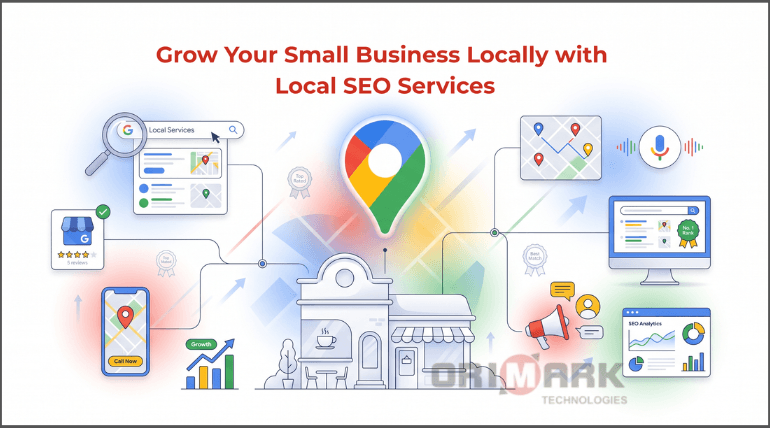
Local SEO is the process of optimizing a business online so it shows up when nearby customers search for relevant products or services on Google. Unlike broad digital marketing, local SEO specifically targets people in a defined geographic area who are ready to visit, call, or buy. Small businesses, from dental clinics and law firms to restaurants and repair shops, rely on local search visibility to drive consistent footfall and phone calls without spending heavily on paid ads. The growing dominance of “near me” and location-based searches on mobile devices has made local SEO one of the most valuable investments a small business can make. This complete 2026 guide covers every component of local SEO, from keyword research and Google Business Profile setup to citations, reviews, link building, and performance tracking.
Understanding Local SEO
Before investing in local SEO services, it helps to understand what makes local search different and exactly how Google decides which businesses to show.
- How Local SEO Differs from Traditional SEO: Traditional SEO focuses on improving a website’s ranking for broad keywords across a wide audience, while local SEO is specifically aimed at appearing in geographically targeted results, including the Google Map Pack, Google Maps, and local organic listings.
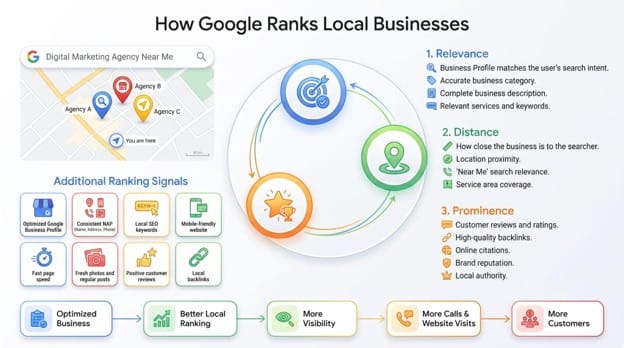
- How Google Ranks Local Businesses: Google uses a combination of signals from your website, your Business Profile, online reviews, and links to decide which businesses appear in local search results for a given query and location.
- Relevance: Google checks how closely a business profile and website match the searcher’s query, which means your services, categories, and content need to clearly describe what you offer and where you offer it.
- Distance: Google measures the physical distance between the business location and the searcher, which is why having an accurate, verified address on your Google Business Profile is non-negotiable.
- Prominence: This reflects how well-known a business is across the web, measured through the quality and quantity of reviews, backlinks, citations, and overall online presence, all areas that a structured local SEO strategy directly improves.
- Benefits of Local SEO for Small Businesses: Ranking well in local search results generates a steady stream of high-intent visitors who are already looking for what you sell, making local SEO one of the highest-ROI digital marketing channels available to small businesses.

Why Small Businesses Need Local SEO Services
Competing in local search is no longer optional, here is what a well-executed local SEO strategy delivers for small businesses.
- Increased Local Visibility: Appearing in the Google Map Pack, the three local listings that appear at the top of search results put a small business in front of customers at exactly the moment they are ready to act, often before they even scroll to organic results.
- Higher Website Traffic: Local SEO drives qualified, location-specific traffic to a website, meaning more people who are actually nearby and capable of becoming customers are landing on your pages.
- More Qualified Leads: Because local search captures users with clear geographic and purchase intent, someone searching “accountant in Bhubaneswar” is much closer to hiring than someone searching “what is accounting”, the leads generated through local SEO convert at a significantly higher rate.
- Better Conversion Rates: Visitors who find a business through local search are typically further along in the buying journey, which means they are more likely to call, book, or walk in compared to visitors from generic traffic sources.
- Building Trust Within the Local Community: A complete, active, and well-reviewed local profile signals to potential customers that a business is legitimate, established, and engaged with its community, which directly influences whether someone chooses you over a competitor.
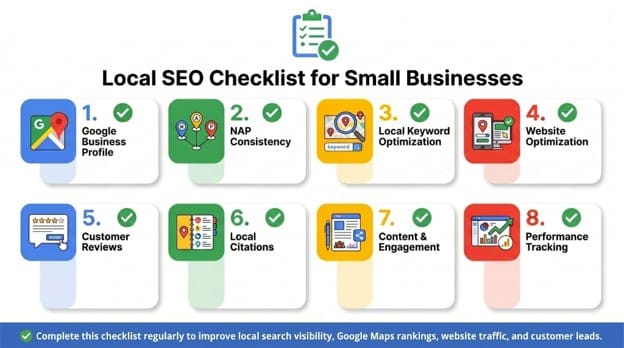
Local Keyword Research
Finding the right local keywords is the foundation of every other local SEO effort, it shapes your content, your profile, and your on-page optimization.
- Finding City-Based Keywords: Start by identifying the specific cities, towns, and neighbourhoods your customers come from, then build keyword targets around those locations combined with your service, for example, “electrical repair Cuttack” or “interior designer Bhubaneswar.”
- Service + Location Keywords: These two-part keywords, which combine what you do with where you do it, are the highest-intent local search terms and should appear naturally in your page titles, headings, meta descriptions, and content body.
- “Near Me” Search Intent: “Near me” searches have grown substantially and are almost entirely completed on mobile devices, so your website and Business Profile both need to be optimized to capture this intent by clearly stating your location and service area.
- Competitor Keyword Analysis: Reviewing which local keywords your top competitors currently rank for helps you identify gaps in your own strategy and discover high-value terms you may be missing. Tools like Google Search Console and third-party SEO platforms make this process straightforward.
Google Business Profile Optimization
Your Google Business Profile is the single most impactful asset in local SEO, it controls how your business appears in Google Maps and the local search pack.
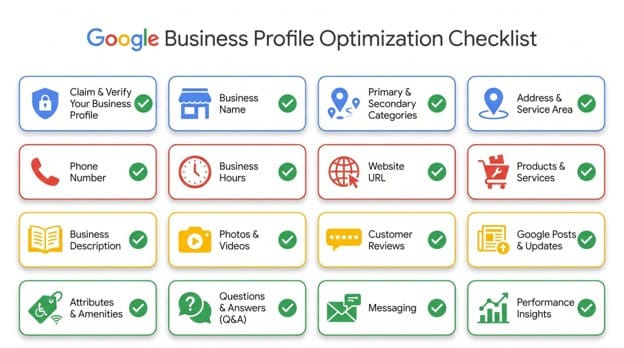
- Setting Up a Google Business Profile: Claim and verify your profile through Google, making sure to use your exact business name as it appears on your signage and other listings — inconsistencies here create trust issues with both Google and customers.
- Optimizing Business Name, Category, Address, Phone, and Hours: Your primary business category is one of Google’s strongest ranking signals, so choose the most specific and accurate category available; your address, phone number, and hours must be kept current at all times to avoid sending customers to the wrong location.
- Adding Products and Services: Listing your individual services and products — with descriptions and pricing where applicable — gives Google more context about your business and increases the likelihood of appearing in searches that match those specific offerings.
- Uploading Photos and Videos: Businesses with high-quality photos receive significantly more direction requests and website clicks than those without; upload images of your premises, team, work samples, and products regularly to keep your profile fresh and credible.
- Managing Customer Reviews: Responding to every review, positive and negative, within 24 to 48 hours demonstrates active management and genuine customer care, which Google treats as a trust signal that can lift your local rankings.
- Using Posts, Offers, and Updates for Engagement: Google Business Profile allows businesses to publish posts about offers, events, new services, and announcements directly in search results, and using this feature regularly signals to Google that your profile is active and well-maintained.
On-Page Local SEO Optimization
Your website needs to communicate your location and services clearly to both search engines and visitors, these on-page elements make that happen.
- Optimizing Title Tags and Meta Descriptions: Every key page on your site should include a location and service keyword in the title tag — for example, “Plumbing Services in Bhubaneswar | [Business Name]” — and the meta description should reinforce this with a clear, action-oriented summary that encourages clicks.
- Creating Location-Specific Landing Pages: If you serve multiple cities or areas, each location should have its own dedicated landing page with unique, relevant content — not just a copy-paste of another page with the city name swapped out, which Google can detect and penalize.
- Adding Local Keywords Naturally: Weave location and service keywords into your page content in a way that reads naturally for a human visitor; keyword stuffing disrupts readability and can trigger a penalty, while natural integration improves both user experience and search rankings.
- Optimizing Header Tags: Use H1 tags for your primary page topic and H2/H3 tags to break the content into logical sections, incorporating local keywords in these headings where they fit naturally to give search engines a clear signal about the page’s geographic relevance.
- Adding Internal Links: Link between related service pages, location pages, and blog posts on your website to help search engines crawl your site more effectively and guide visitors toward the information or contact page that gets them closer to becoming a customer.
- Adding Map, Address, and Contact Details: Embed a Google Map and display your full NAP (name, address, phone number) on your contact page and ideally in your site footer so it appears on every page — this reinforces location signals for search engines and makes it effortless for customers to reach you.

Technical Local SEO
Technical SEO ensures that search engines can access, understand, and rank your website properly. These five technical factors are especially important for local search.
- Mobile-Friendly Website: More than 60% of local searches are performed on mobile devices, so your website must load correctly and be easy to navigate on a small screen. Google uses mobile-first indexing, meaning a poor mobile experience directly hurts your rankings.
- Fast Page Loading Speed: Pages that take more than three seconds to load lose a significant portion of visitors before they even see the content; compress images, enable caching, and minimize unnecessary scripts to bring load times down to under two seconds.
- Local Business Schema Markup: Adding Local Business schema to your website gives search engines a structured data format to read your business name, address, phone number, hours, and reviews, which can result in enhanced search listings and better accuracy in local results.
- Click-to-Call Buttons: A prominently placed click-to-call button on mobile pages removes friction from the most common local search action — calling a business — and directly increases the number of leads generated from your organic local traffic.
- Proper URL Structure for Location Pages: Use clean, descriptive URLs for location pages such as “/services/plumbing-bhubaneswar/” rather than generic strings with query parameters — clear URL structures help search engines index your location pages correctly and make your links more trustworthy to users.
Building Local Citations and Directory Listings
Citations are one of the foundational signals Google uses to verify and rank local businesses, getting them right matters more than most small businesses realize.
- What Are Local Citations? A local citation is any online mention of your business name, address, and phone number — whether on a directory, a news site, a social platform, or a review site — and each accurate mention reinforces your legitimacy and location to search engines.
- Top Business Directories for Local SEO: Priority directories include Google Business Profile, Bing Places, Justdial, Sulekha, IndiaMART, Facebook, and industry-specific directories relevant to your sector; a presence on these high-authority platforms carries the most weight with local search algorithms.
- NAP Consistency: Your business name, address, and phone number must appear in the same format across every directory, your website, and your social profiles — even minor differences like “St.” versus “Street” can confuse search engines and undermine your local authority.
- Fixing Duplicate or Incorrect Listings: Duplicate listings split your authority and can show outdated information to potential customers; audit your citations regularly using tools or manual checks, and claim or remove incorrect duplicates to keep your online presence clean and consistent.
Online Reviews and Reputation Management
Reviews directly influence where your business ranks in local search and whether a potential customer chooses you over a competitor — managing them actively is essential.
- Why Reviews Matter for Local Rankings: Google treats the quantity, recency, and average rating of your reviews as direct ranking factors for local search; a business with 80 detailed, recent reviews consistently outperforms one with 12 older ones, even if the overall star rating is similar.
- Encouraging Genuine Customer Reviews: The most reliable way to grow your reviews is simply to ask, follow up with customers via SMS, email, or a printed card after a positive interaction and include a direct link to your Google review page to remove any friction from the process.
- Responding to Positive and Negative Reviews: Thanking customers who leave positive reviews shows appreciation and encourages others to do the same; responding professionally to negative reviews demonstrates accountability and can often recover a damaged customer relationship while showing prospective customers how you handle issues.
- Managing Online Reputation Effectively: Monitor reviews on Google, Facebook, Justdial, and any sector-specific platforms weekly; set up Google Alerts for your business name to catch mentions that don’t appear on the usual channels and address any inaccurate or harmful content promptly.
- Avoiding Fake or Incentivized Reviews: Google’s policy clearly states that reviews must reflect genuine customer experiences, and fake or incentivized reviews are not permitted. Businesses caught using them risk having reviews removed, rankings penalized, or their Business Profile suspended entirely.
Local Link Building
Links from other locally relevant websites tell Google that your business is trusted and established within the community — these tactics build them authentically.
- Getting Links from Local Websites: Reach out to local bloggers, community websites, and regional news portals to feature your business — even a brief mention of an opening, a service, or a community contribution can generate a valuable backlink that boosts your local prominence score.
- Partnering with Local Businesses: Cross-promotion with complementary businesses in your area — a photographer partnering with a wedding venue, for example — creates natural opportunities for each business to link to the other, benefiting both parties’ local SEO without any cost.
- Local PR and Community Mentions: Publishing newsworthy content — a charitable initiative, a community award, or a notable business milestone — gives local journalists and bloggers a reason to write about and link to your business, generating high-quality editorial links.
- Sponsorships, Events, and Local News Coverage: Sponsoring a local sports team, festival, or charity event almost always results in a backlink from the event or organization’s website, and the community goodwill it generates can also translate into word-of-mouth referrals and direct traffic.
Tracking Local SEO Performance
You cannot improve what you don’t measure, these six data sources give a complete picture of how your local SEO efforts are performing.
- Google Business Profile Insights: Profile Insights shows how many people found your listing via direct search versus discovery search, how they interacted with it — calls, website visits, direction requests — and which photos received the most views, giving you a direct window into customer behavior.
- Google Analytics 4: Track which pages on your website receive traffic from local search, how long local visitors stay, and what actions they take, so you can identify which location pages or service pages are converting well and which need improvement.
- Google Search Console: Search Console reveals the exact queries people use to find your website in Google Search, along with your average position and click-through rate for each, helping you prioritize which keywords deserve more on-page attention.
- Call Tracking: Assign a unique tracking phone number to your local SEO efforts so you can measure exactly how many inbound calls are being generated by organic local search, separate from other marketing channels.
- Form Leads and Direction Requests: Track contact form submissions from local landing pages and monitor direction request data in your Business Profile Insights to understand which service areas are generating the most interest and where demand is strongest.
- Keyword Ranking by Location: Use rank-tracking tools to monitor where your website and Business Profile appear for target keywords across different cities or neighbourhoods — this helps you spot ranking improvements, catch sudden drops early, and adjust your strategy accordingly.
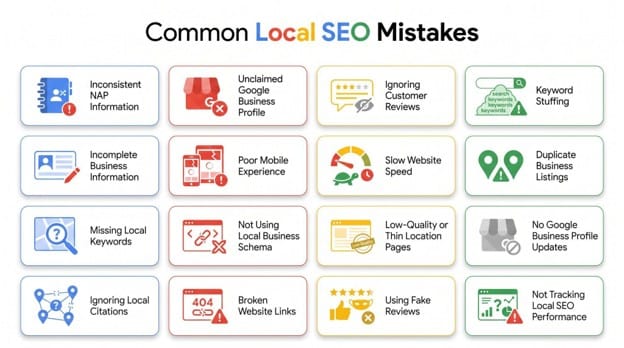
Common Local SEO Mistakes to Avoid
Even well-intentioned efforts can stall local SEO progress — these are the most common mistakes small businesses make and why they matter.
- Inconsistent Business Information: If your address is listed differently across directories — even with small variations like abbreviating a road name — search engines lose confidence in your location data, which can suppress your rankings in nearby searches.
- Ignoring Customer Reviews: Leaving reviews unanswered, especially negative ones, signals to both Google and potential customers that the business is unresponsive; regular engagement with reviews is a straightforward and free ranking signal that many small businesses overlook.
- Keyword Stuffing: Forcing location or service keywords into content unnaturally not only makes copy hard to read but also triggers Google’s spam filters, which can penalize your rankings rather than improve them.
- Poor Mobile Experience: A website that is difficult to navigate on a phone directly increases bounce rates from local search traffic; since most local searches happen on mobile, a poor mobile experience is one of the fastest ways to lose potential customers.
- Not Updating Google Business Profile: Businesses that leave their profile static — with outdated hours, missing photos, or unanswered Q&As — signal inactivity to Google, which over time can cause the listing to rank lower than competitors who maintain their profiles regularly.
- Creating Thin Location Pages: A location page that simply swaps a city name into a generic template and offers no real useful content provides no value to visitors and no differentiation signal to Google; each location page should include unique details about the area, specific services, and local relevance.
- Using Fake Reviews: Beyond the ethical issues, fake reviews violate Google’s review policies and carry serious consequences, including review removal, ranking penalties, and potential Business Profile suspension risks that far outweigh any short-term boost in star rating.
Conclusion
Local SEO is not a one-time task, it is an ongoing discipline that rewards small businesses that stay consistent, accurate, and engaged with their online presence. By combining thorough keyword research, a fully optimized Google Business Profile, well-structured on-page and technical SEO, clean citation management, authentic reviews, community-focused link building, and regular performance tracking, small businesses can build local search visibility that compounds over time and delivers reliable, high-intent customers. The businesses that rank at the top of local search results are rarely those with the biggest budgets, they are the ones that show up consistently, present accurate information, and genuinely earn the trust of their community. For small businesses ready to turn local search into a real growth channel, working with experienced professionals at Orimark Technologies can accelerate every step of this process and deliver measurable results.